In the evolution of China's privately owned enterprises, bringing in an external professional manager has usually come at a high cost of friction. Because of a deficit of trust and the resistance that the cultural and values soil so often puts up, founding teams and externally hired executives easily fall into a trap of "a short honeymoon, then a long contest". It has become an invisible ceiling over much of corporate China's modernisation of governance.
But Anta Sports' leadership change in January 2024 offers a template well worth studying: founder Ding Shizhong stepped down as CEO, and Zheng Jie, who had worked with him for 16 years, moved to become CEO of Amer Sports. That partnership, spanning economic cycles, did more than drive exponential growth in the group's market value. It also achieved, at the level of governance structure, a healthy symbiosis between founder and professional manager.
Reviewed through the lens of organisational behaviour, this was no accident. It reflects deep practice by Anta in building an executive partnership mechanism: through values alignment, full delegation of authority, institutionalised contest and a community of interest, it addressed the agency problem in a systematic way.

Act one: how the choice of people works at its core, from "capability fit" to "values alignment"
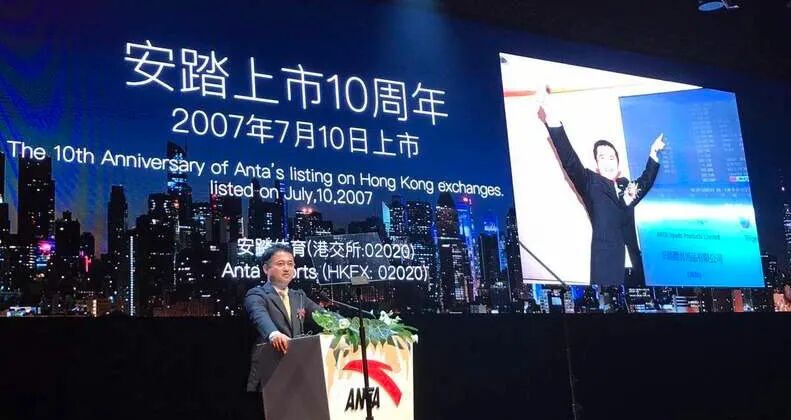
In 2007 Anta listed in Hong Kong. The company was growing fast, yet founder Ding Shizhong was full of a sense of crisis. Looking ahead, he saw that Anta had to move from "brand wholesale" to "brand retail", and he thought of Zheng Jie, then Vice President of adidas Greater China.
The approach was a challenging one. On one side stood a global industry giant, and on the other a privately owned listed company at a critical stage of brand upgrading. One represented a mature international system and the headquarters perspective of Shanghai; the other was rooted in the industrial heartland of Fujian merchant culture, Jinjiang in Fujian.
Ding Shizhong did not open with compensation. He painted a blueprint for a shared undertaking: "Join Anta, and together we can build the leading brand in China's mass sports market."
Zheng Jie hesitated for a full 10 months. That was his careful assessment of integrating into a cross-cultural organisation, and the deliberation a major career move demands. What finally tipped the decision was a shared strategic view of where the Chinese market was heading. Both believed that a local brand was fully capable of competing with global giants, and even of leading the industry. In 2008, Zheng Jie officially took up the post.
[Management insight]
· Vision-driven: outstanding leaders are usually driven by an achievement motive. Pay is only a baseline factor. Deep identification with a company's long-term strategic direction, and with its founder's values, is what lowers the cost of later communication and carries the relationship across cycles.
· Reading people in depth: selecting a partner-level executive means assessing not only the "visible qualities" of business capability, but also whether their strategic ambition matches the company's "invisible compatibility" with its stage of development.
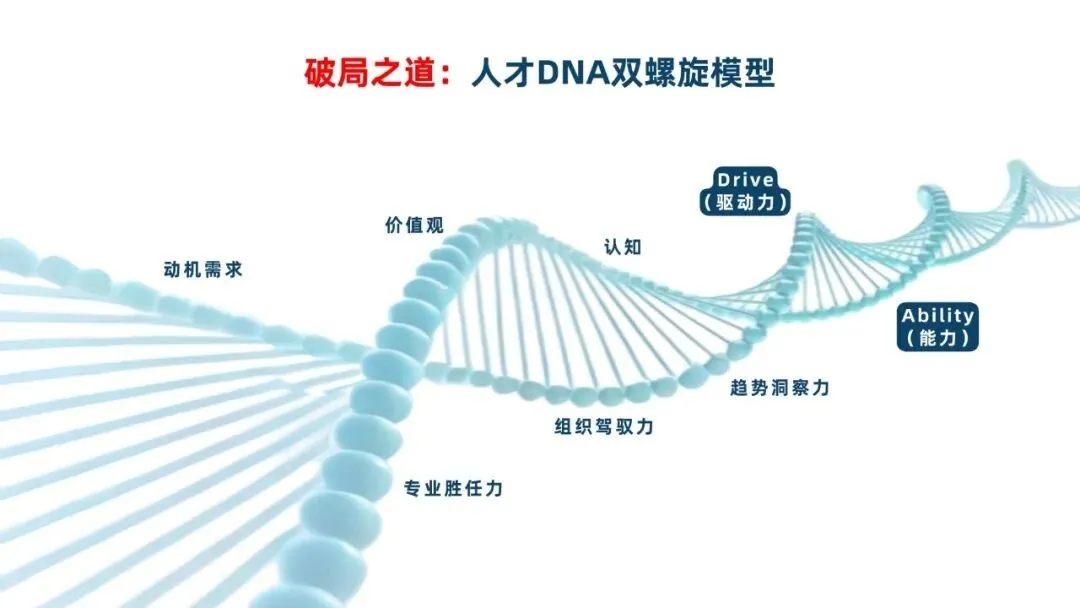
This closely corroborates a methodology YUNLUE Consulting distilled from more than ten years of executive search and from its track record of having served 400+ leading and mid-tier Chinese privately owned enterprises and placed over 2,000+ executive talents: the "DNA double-helix model" for identifying core senior talent with precision.
· First helix: Ability. This examines "how the person can deliver". For Zheng Jie, it was the professional systems and the organisational command he had built at adidas. This is the hard threshold.
· Second helix: Drive. This examines "what the person is fighting for", covering cognitive patterns and deep motives. It determines whether a candidate is willing to accompany the business across cycles.

Act two: the core of using people well, removing "organisational friction" and building a "closed loop of authority"
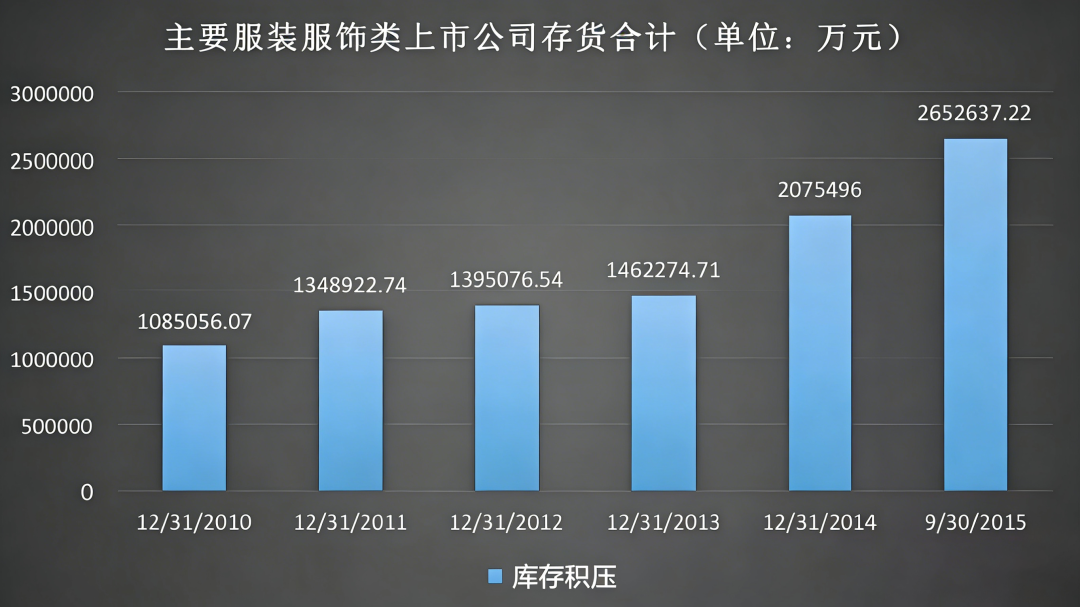
Once in post, Zheng Jie looked past Anta's rapid growth and saw what was hiding behind it. At the time the industry broadly ran a coarse wholesale model of "brand owner to distributor": the brand simply pushed stock into the channel and counted that as a sale. Zheng Jie believed that blind production without terminal retail data would inevitably lead to a severe inventory risk.
He therefore pushed a "retail-oriented transformation", requiring a unified data system so that headquarters could monitor terminal sales in real time. This broke the existing "comfort zone of interests" and the informal understandings of the sales system, and triggered fierce pushback. Many long-serving executives asked: "The wholesale model is what took Anta public. Why change it?"
Faced with a contest between "traditional experience" and "modern management", Ding Shizhong showed pivotal strategic resolve. At an executive meeting he overrode the doubters and stated plainly: "The transition will hurt, but without it there is no future. From now on, the reforms Mr Zheng pushes forward are the will of the group, and they must be carried out."
With Ding Shizhong's full delegation of authority, Anta completed the digital transformation of its channel. It was precisely this early move into retail that, when the 2012 industry-wide inventory crisis broke, gave Anta a sharp ability to respond. It became the Chinese sports brand that emerged from the trough first.
[Management insight]
· Delegation of authority is essentially about removing resistance: "trusting the person you employ" is not only an attitude; it is how the founder dissolves organisational friction. In the early stage of change, because the old and new teams do not fully agree on where things are heading, shifts in authority and responsibility easily make long-serving employees feel insecure. That mindset often leads people to protect old habits out of instinct, and so they create obstacles to execution without meaning to. Ding Shizhong moved long-serving executives out of the way because he wanted to face that emotion and pressure himself, so that Zheng Jie could steer clear of tangled personal relationships and put his energy where it mattered, on reforming the business.
· The founder absorbs the "pressure of transition": a new executive is brought in to create change, and change inevitably breaks the existing balance. Good founders understand that the communication cost of breaking old habits and untangling personal networks should be borne by themselves, not left to the new executive to face alone. When the old ways of working no longer suit the new phase of development, the new rules will struggle to take hold unless the founder steps up and makes them clear. Only when the founder personally sorts out internal relationships and establishes clear boundaries of authority can the organisation eliminate internal friction and complete the shift from "relying on experience" to "relying on systems".
007.webp"/>Act three: the decision mechanism, a fault-tolerant system for "constructive conflict"
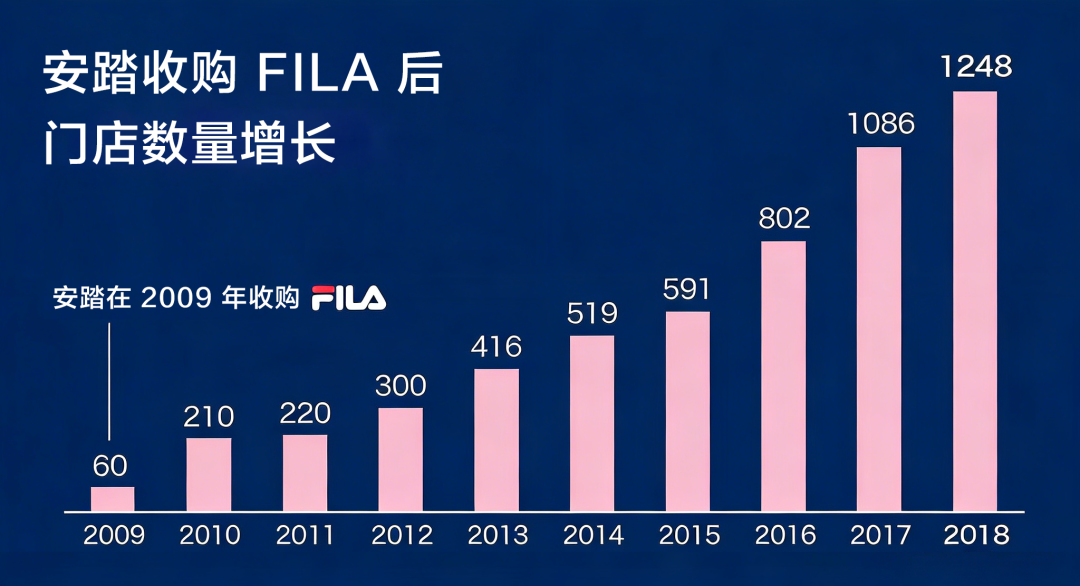
The acquisition of FILA was seen as a big gamble for Anta. Facing heavy losses in the early phase of taking it over, the instinct inside was path dependence: "Copy Anta's successful wholesale model? Push stock to distributors and the money comes back straight away."
Zheng Jie proposed something different: the moat of an international high-end brand lies in experience and scarcity, and the moment wholesale is opened up for volume, the brand is doomed. He insisted on a high-risk, asset-heavy "all-direct-operated" strategy.
Pressed on it, Zheng Jie said bluntly at a management meeting: "If FILA opens next door to Anta and sells commodity goods, it will forever be a vassal of Anta. We are not raising a docile cat; we are raising a tiger in the forest."
At the crucial moment, Ding Shizhong chose to trust the professional judgement. He not only withstood pressure from the board, but created a five-year "strategic special zone" for FILA: judge by tone and positioning, not by profit; judge by store efficiency, not by volume. In essence, the founder paid real money to back a professional manager's strategic vision.
This mechanism, which combines tolerance with strictness, eventually incubated FILA into a cash cow, and taught Anta how to run a multi-brand house: using "strategic losses" to pursue "exponential growth".
[Management insight]
· Overcoming the "experience trap": the founder's biggest trap is trying to replicate past success. The core value of an executive is not only execution. It is the courage to challenge the boss's path dependence with professional intuition. A true partner must dare to apply the brakes in the very area where the company is strongest.
· Trust needs to be "contracted": Anta's "strategic bet" set the boundary of delegated power: the group provides a "protection period" (funding and tolerance for error), and the executive signs a "blood oath" (quantified milestones). In essence this is trading space for time and results for trust. It gives innovation psychological safety, while putting reins on power.

Act four: the incentive mechanism, evolving from "agent" to "business partner"
Ding Shizhong once summed up the relationship better than anyone: "On our own, neither of us is a perfect CEO. Together, we may be the best pairing in the world." This "dual-core drive" became Anta's invisible engine for crossing cycles:
· Complementary in strategy: Ding Shizhong decided "what to buy" on sharp business instinct, while Zheng Jie used rigorous systemic capability to work out "how to buy and how to manage".
· Blended in management: Ding Shizhong was the accelerator, with a sharp style and a drive for extreme efficiency. Zheng Jie was the shock absorber, absorbing the founder's high pressure and translating grand strategy into tactical moves a team can execute. What sustained this long-term rapport was not sentiment alone, but breadth of vision.
At Anta a professional manager can earn more than the founder over the long run. That is rare in Chinese family-owned private enterprises, yet at Anta it is standard practice. Ding Shizhong backs his words with real money: "Employees are not screws; they are the most important business partners." Through equity incentives, business partnership and profit-sharing mechanisms, Anta turned its executives into genuine insiders. It is this underlying design of shared interests and shared destiny that has supported Zheng Jie in leading the team from turning FILA around to acquiring Amer Sports, turning one island after another into Anta's vast brand ecosystem.
[Management insight]
· Ending the "agency dilemma": the highest form of governance is not monitoring, but symbiosis. By binding the professional manager thoroughly through equity and profit sharing, the company elevates them from "employee" to "owner". When interests fully penetrate, management decisions automatically align with shareholder value, and the cost of oversight approaches zero.
· Embrace the premium on "human capital": accepting "pay inversion" is the mark of a founder with real breadth of vision. The owner earns from the "appreciation of the enterprise's assets", while the executive earns from the "realisation of their capability's value". By paying above market (as with Zheng Jie's high salary) to buy strategic execution that cannot be replicated, a company is in essence making its best-value investment.

Conclusion
Zheng Jie's 16 years of collaboration with Anta is not only an individual success, but an important footnote on the maturity of governance in China's privately owned enterprises. It shows us that, at a time of rising uncertainty, the era of solo effort built on personal heroism is over, and competition between enterprises will ultimately return to a contest of organisational capability.
For founders, how to attract and make good use of outside professional strength is a self-revolution of reconstructing one's thinking and raising one's breadth of vision:
1. Do you have the strategic resolve to seek deep alignment of values?
2. Do you have the political courage to clear internal obstacles for change?
3. Do you have the openness to build a genuine community of interest?
Know people, use them well, respect them, share with them. This is not only the governance logic of Anta, but also the path Chinese enterprises must take to move from "resource-driven expansion" to "capability-driven growth".
[A word with you] Business is an infinite game. The founder's greatest loneliness is often not having no one around, but looking around and finding no one to rely on and no one to share the burden. If you too are looking for a "business partner" who can travel with you across cycles, or if the "DNA double-helix model" mentioned in this article interests you, we would be glad to hear from you. May every ambitious enterprise find the "Zheng Jie" who understands it.