Over 8 years of specialising in recruiting for the Head of HR role, talking with founders at many client companies, I keep hearing the same sigh: "Finding a reliable HRD or CHO is harder than finding a CEO!" An even more challenging reality is that even when someone is found after enormous effort, fewer than 30% survive their first year after joining. This is the industry pain point I have witnessed over all these years.
Jack Welch, former CEO of General Electric, once said that the head of human resources must be the number two person in any organisation. He saw human resource management as the source of a company's vitality, and believed that an excellent HR leader needs to act like a "doctor": diagnosing organisational problems, unlocking employee potential and optimising the talent mix in order to raise the overall effectiveness of the enterprise.
The role is this important and yet this hard to get right. Today, I will go deep into the secret of success for the Head of HR, framed by this problem of "can doctors heal themselves?".
The phenomenon: hard to hire and hard to keep, the Head of HR as a "high-risk species"
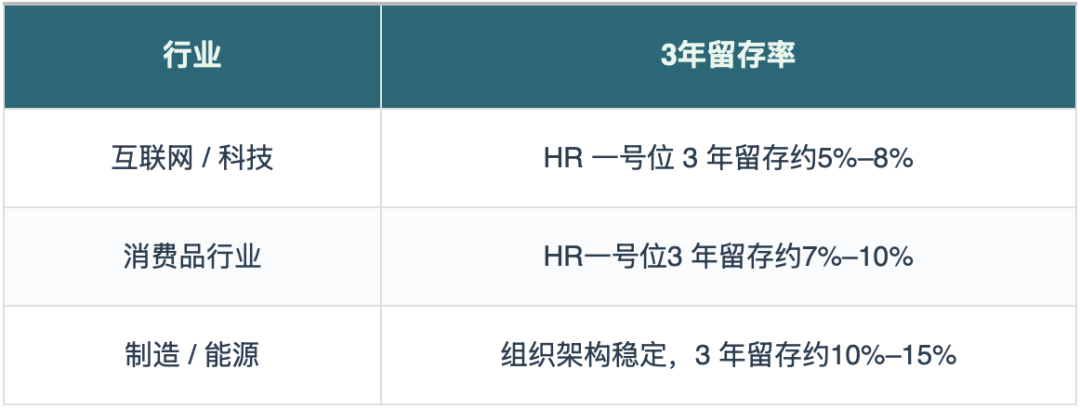
The data comes from a 2025 YUNLUE survey of more than 1,600 samples, which looked at the retention rate of Heads of HR in companies mainly across 4 industries: internet, technology, consumer goods and energy.
The survey found the highest attrition among privately owned enterprises in rapid growth and transformation phases. In technology and new consumer sectors especially, cases of two appointments in a year or five in three years are everywhere. Even though in companies with mature businesses, measured on a three-year stable cycle, the retention rate can reach above 65%, more than 80% of founders are still dissatisfied with, or see shortfalls in, the capabilities of their current Head of HR (and would be interested in talking to a better HR candidate if one came along).
The retention rate of externally hired Heads of HR over the past 3 years, by industry, is cause for concern:
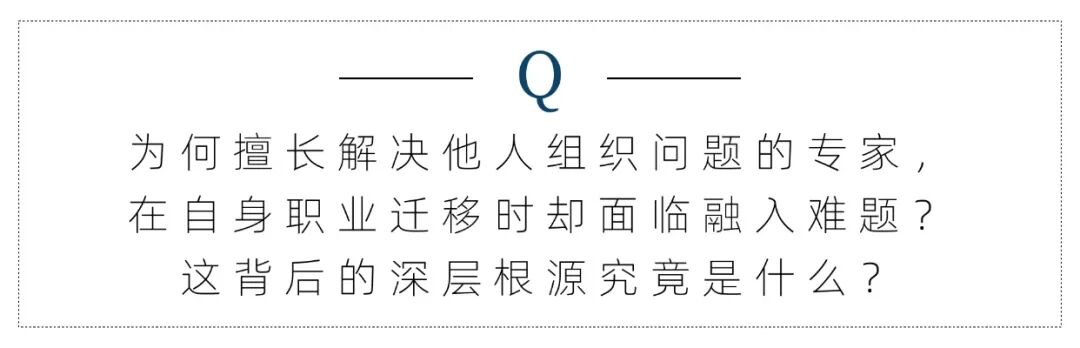
The root causes: a two-way fit challenge between company and candidate
Based on a summary analysis of YUNLUE's past Head of HR cases, combined with interviews with more than 30 entrepreneurs and more than 100 senior HR executives, we found that the low success rate of externally hired Heads of HR is fundamentally a consequence of the company and the HR executive failing to achieve a genuine fit in capability, perception and behavioural logic, drivers and cultural soil, and that the core of this fit failure concentrates in four underlying problems:
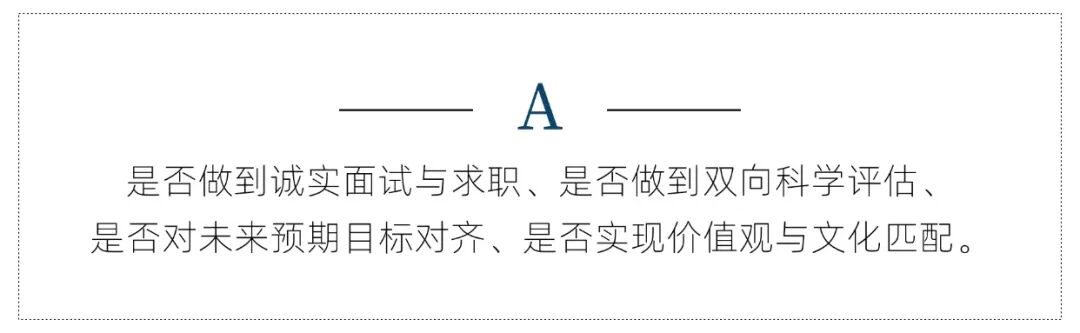
These four problems are like four invisible walls. If any one is missing, the foundation of the match collapses, and every surface-level conflict can be traced back to one of them.
Root cause one: whether interviews and applications are honest determines whether the basis of the match is real
Honesty is the first precondition of a two-way match. Once a company or a candidate deliberately or inadvertently conceals something during the interview and application process, it plants the seeds of information asymmetry from the very start, and every subsequent collaboration faces a deficit of trust.
On the company side:
in order to attract excellent talent, companies downplay their own resource shortcomings and organisational pain points. For example, they selectively avoid the fact that the HR team is not strong enough, that there is no cross-functional coordination mechanism, that there is core resistance to organisational change, or what the real boundaries of authority and responsibility and the resource support for the role are. They replace substantive support with verbal assurances, leaving the candidate with an inadequate sense of how hard it will be to land things.
On the candidate side:
candidates over-emphasise their past experience of building systems and understate their own gaps in adapting to a growing company, solving urgent problems and mobilising resources. They overlook their own fit for a particular stage of development (such as going from 0 to 1), and this "CV premium" easily gives the company misplaced expectations.
In 2023 I served a fast-expanding technology company that, when recruiting an HRD, required the person to build a job-grade and compensation system within 3 months. When the candidate asked about data support and cross-functional cooperation, the founder replied only that "you will need to drive this; I will definitely support you", while concealing the reality that "the business units are not very cooperative". After joining, the candidate had no basic data to build on, the proposal became an exercise on paper, and the collaboration regrettably ended. The core of this failure was exactly that the company side did not interview honestly, planting from the start the information asymmetry that led the match to fail.

Root cause two: whether there is scientific evaluation in both directions determines whether the fit is precise
In many cases a company hires the wrong person and a candidate picks the wrong platform not because either party is lacking in quality, but because neither has built a scientific evaluation system. They stay at the surface level of "looking at experience, discussing salary", ignoring the fit between capability and need and between the individual and the company, and end up with "a forced match that is never sweet".
On the company side:
companies easily fall into the trap of the "perfect talent". They focus on hard indicators such as professional experience and system-building capability, while neglecting to assess the candidate's ability to land things and to mobilise resources, the driver behind the person's wish to join, and the fit between the candidate and the company's stage of development and business pain points. There is a lack of scenario-based assessment to verify actual ability.
On the candidate side:
candidates often focus their evaluation on company size, salary and job grade, and do too little research on the founder's view of HR's value, the company's level of support for HR work, the inclusiveness of the organisational culture, the company's core pain points or its pace of development. They know only a little about the "soil" they are about to step into, and may even think "it's all quite straightforward, if I'm willing, I can do it well".
In 2025 my team recommended an HRVP with a purely big-company background to a domestic company. The company assessed in depth, and was very satisfied with, the candidate's professional ability to build a global talent system, but made no assessment of how that fitted the "firefight first, then build systems" reality of a domestic private enterprise. The candidate, meanwhile, looked only at the company's size and growth rate and did not assess that the company's current core pain point was the collective loss of its sales team. The absence of scientific evaluation in both directions doomed the collaboration from the start.
Root cause three: whether expected future goals are aligned determines whether the pace of the match is in step
Goals guide action. If the company and the candidate have no shared understanding of the Head of HR's work priorities, success standards or timeframe, the two sides will go their separate ways at work, and even if both are trying hard, a divergence in path will often break the collaboration.
On the company side:
the company expects "short-term results" in how it values HR's work and overlooks the fact that HR's value is delayed and non-obvious. It wants both strategic altitude and fast delivery of results; its requirements on priorities are vague and its criteria for judging results unclear, easily leaving the candidate at a loss about what to do.
On the candidate side:
the candidate holds firm to "professional, scientific" practice and to their own rhythm and plan, does not actively and promptly adapt to the company's core needs, and puts the long-term system building they excel at ahead of solving the company's urgent pain points. Their definition of "success" diverges fundamentally from the company's, and they may even fall into "professional self-indulgence", believing their own plan is more valuable and ignoring the company's real demands.
After the purely big-company HRVP described above joined, they failed to get aligned with the founder on the business's urgent pain points and instead submitted a Global Talent Development System Plan and began pushing it forward, badly misaligned with the founder's core goal of "steadying morale first, then building systems". The collaboration lasted only three months. This is a textbook case of unaligned goals: the candidate's work plan ran counter to the company's actual needs, and no amount of professional excellence could win recognition.

Root cause four: whether values and culture match determines whether the bond of the match lasts
If professional capability determines whether someone can do the job, then values and cultural fit determine whether they can thrive together with the company. A company's cultural atmosphere, communication style and informal rules are often the key to whether a candidate can integrate and stay for the long term, yet both sides frequently overlook them.
On the company side:
domestic private enterprises mostly have a "business-driven, flexible" culture, yet they rarely convey to candidates the organisation's informal power structure, the team's collaborative habits or the deep concerns of management. These unwritten "contexts" make up a company's distinctive culture, and if the candidate does not understand them, cross-functional collaboration often becomes a struggle.
On the candidate side:
the candidate is immersed in the standardised, process-driven culture of a mature company, does not assess in advance how their own working style fits the company culture, and after joining makes little effort to integrate actively as a "learner" and "co-builder". They continue to work in their old mode, and when they meet resistance they easily become frustrated or confrontational, further worsening the culture clash.
Heads of HR commonly run into integration difficulties in months 3 to 5 after joining: they cannot adapt to the company's communication style, do not understand the team's collaborative habits, and have no insight into the unspoken expectations of management, which leaves them isolated from the business units. Even with a sound professional proposal, they struggle to get it implemented and in the end can only leave quietly.
The breakthrough: meeting each other halfway, anchoring on the four root causes
The difficulty of hiring and onboarding a Head of HR is not unsolvable. From the practice of the YUNLUE HR team helping more than 300 senior and mid-level HR executives integrate successfully over the past 5 years: as long as the company and the candidate anchor on these four underlying problems and form a healthy dynamic of "two-way fit, joint improvement", the curse of "can doctors heal themselves?" can be broken, and it becomes possible to "choose accurately, retain durably and go far". As a third party, the search firm also needs to play the role of bridge and enabler, pushing both sides to solve the problem and achieve a precise match. Meeting each other halfway means: the company and the candidate each do their part, and the search firm does the bridge-building and enablement.
One
On honest interviews and applications: communicate candidly and show each other as you really are
- · On the company side: Candidly disclose the role's boundaries of authority and responsibility, the resource support, the organisational resistance and the core pain points, and do not dodge your own weaknesses. For example, state clearly that "cross-functional cooperation needs the founder's backing" or "the HR team currently has these capability gaps", so that the candidate has a clear sense of how hard it will be to land things.
- · On the candidate side: Be candid about your strengths and weaknesses, do not exaggerate past achievements, and make clear where you excel and where you fall short. For example, be open that "I am strong at building systems and need some time to adapt on urgent problem solving", so that the company forms an objective view of your actual capability.
- · How the search firm helps: As a neutral third party, push honest communication through two-way reference checks and scenario-based meetings: verify with the company the real authority and resources of the role, and give the candidate a true picture of the working scenario while confirming their own gaps and the boundaries of fit, so that neither side forms a misjudgement because something was concealed.
Two
On scientific evaluation in both directions: build a multi-dimensional system, fit over expertise, a precise match
- · On the company side: Step outside the "expectation of a perfect talent". Beyond professional ability, focus on the candidate's ability to land things and to mobilise resources, and on their motivation for joining the company. Use scenario-based simulated interviews (such as "how would you handle a conflict between an urgent business need and the long-term plan") to verify how the candidate actually responds, and keep focused on the core requirement of "being able to solve the company's current pain points".
- · On the candidate side: Beyond company size, salary and job grade, use industry research and interviews with people inside the company to assess the founder's view of HR's value, the company's stage of development and cultural atmosphere, and the actual level of support for HR work, and decide whether this company is the "soil" in which you can take root.
- · How the search firm helps: Put "fit" above "expertise" and build a bespoke Head of HR assessment model. Beyond hard professional indicators, strengthen the assessment of the candidate's "soft driving force" and "cultural fit", and at the same time give the candidate support for in-depth research into the company, showing the company's real situation and helping both sides reach a scientific evaluation.

Three
On aligning expected future goals: set the standards and settle an in-step action guide
- · On the company side: Look dialectically at the delayed value of HR work, allow the candidate a reasonable period for diagnosis and trial and error, and agree on the core priorities of the work and quantifiable success standards for each stage (3, 6 and 12 months). For example, "the core goal for the first 3 months is to bring the sales attrition rate below 10%", instead of a vague demand that "results should appear".
- · On the candidate side: Actively adapt to the company's core needs, put solving the company's urgent pain points first, set aside your own fixed plan, and work with the company to set stage-by-stage goals and clear criteria for judging results, avoiding a professional plan that talks only to yourself.
- · How the search firm helps: Push both sides to reach written agreement on a "priority task list for the first quarter", and set up a regular communication mechanism between the two sides and a monthly three-party review, aligning progress promptly and correcting deviations from the goals so that both sides always act in step.
After the failure with the big-company HRVP described earlier, we matched a new HRVP for the client. We not only simulated the "conflict between urgent pain points and the long-term plan" scenario in the interview, but also pushed both sides to settle the core goal for the first quarter: solve the loss of the sales team first. After joining, the new candidate began frontline interviews in the first month and attached a "specific recommendation on retaining and motivating the sales team" to the front page of the three-year talent development roadmap, setting a working rhythm of "stop the bleeding first, then rebuild the blood supply". Within six months, not only was the sales team stabilised, but a succession plan for key roles was also implemented, achieving a smooth transition from "firefighting" to "systems". That is the power of aligned goals.
Four
On matching values and culture: integrate proactively and build a bridge of cultural communication
- · On the company side: Proactively convey the organisation's cultural atmosphere, communication style and informal rules, and arrange for a senior executive with real influence to act as mentor during the integration period, creating a supportive environment. At the same time, guide the business units to cooperate proactively with HR, reducing the likelihood of culture clashes.
- · On the candidate side: Adapt to the "learner and co-builder" stance as you integrate into the team, proactively adjust to the company's communication style and working pace, go to the frontline to understand the organisation's cultural character, and translate professional advice into action language the company can understand and accept, rather than clinging to your old mode.
- · How the search firm helps: Act as a cultural bridge by giving the candidate guidance on fitting into the company culture and helping them quickly understand its informal rules, while helping the company understand the professional logic of HR work and moving both sides through the cultural adjustment.
After the 2023 failure with the technology company, the client chose to work with YUNLUE's CXO service. We restarted the search and pushed the company to make three changes: the founder held a dedicated meeting with the business heads in the new HRD's first week to back them; a temporary cross-functional project team was set up to ensure a continuous input of business perspective; and "fully implementing a job-grade and compensation system within 3 months" was broken down into stage goals of "first month: research and consensus, second month: pilot, third month: iterate and roll out". The new HRD also proactively integrated into the company's flexible culture, using business pain points as the entry point for their work, and completed a full year in the role. They not only implemented the compensation and job-grade system but also led the talent review and pipeline building projects, becoming an "organisational partner" trusted by the business.

A final word: the "high risk" of the Head of HR holds the evolutionary code of the whole function
Breaking the curse of "can doctors heal themselves?" for the Head of HR essentially means letting HR executives apply the principles of organisational fit and executive integration that they design for companies to their own job search and onboarding, while companies adopt a candid and rational attitude in return, achieving a two-way fit.
We often call the Head of HR a "high-risk role", but as companies move from "opportunity-driven" to "organisation-driven", this role is becoming one of the scarcest and most needed in private enterprises.
For the business owner, the Head of HR should not be positioned merely as a firefighter or an executor, but as a genuine "organisational partner". Their value lies not only in building systems and attracting talent, but in using professional skill to help the company move from "rapid growth" to "systematic operation", and to shift management from "experience-driven" to "standards-driven".
For candidates for the Head of HR role, choosing a company is essentially choosing "a boss on the same wavelength" and "soil that fits". More than company size, job grade and salary, the boss's level of understanding, respect for the profession and willingness to delegate and enable are the key to whether you can take root and grow. Only companies willing to listen to professional voices and to invest in upgrading the organisation can truly unlock the value of the Head of HR.
For the search firm, the meaning of serving the Head of HR role has long outgrown "sending CVs and closing orders". The real value lies in providing end-to-end support across talent matching, integration support and realisation of value: both a talent adviser to the company and a growth partner to the candidate, upgrading from a transactional role to a strategic connector.
Finally, a question for you, reading this: whether you work in HR or manage a company, what do you think is the core key to an externally hired Head of HR succeeding? Have you experienced or heard of a real case of "can doctors heal themselves?" Send your views and stories in the comments~
YUNLUE Consulting: HR Function Team
I am Star from YUNLUE, and I lead the HR Function Team, which has worked for more than 8 years in senior human resources recruiting. We specialise in head-of-function roles such as HRD and CHO. If your company is struggling to find an HR leader, or if you are an HR executive looking for the "ideal stage", my team and I would like to be your partners in breaking through.
· 150+ clients served, 300+ successful senior and mid-level HR placements
· Insights into the HR systems and Talent Maps of 100+ benchmark companies
· More than 1,000 core HR Talent Portraits modelled and analysed
We do more than precisely match key talent for companies. Through our "executive integration support programme", we help candidates land smoothly and keep creating value for the business, achieving mutual success for talent and organisation.